

The Floating Palace: How Ocean Liners Invented Modern Luxury
The symbiosis of Art Deco grandeur and the age of the great ocean liner, 1920–1940
HISTORICAL CONTEXT
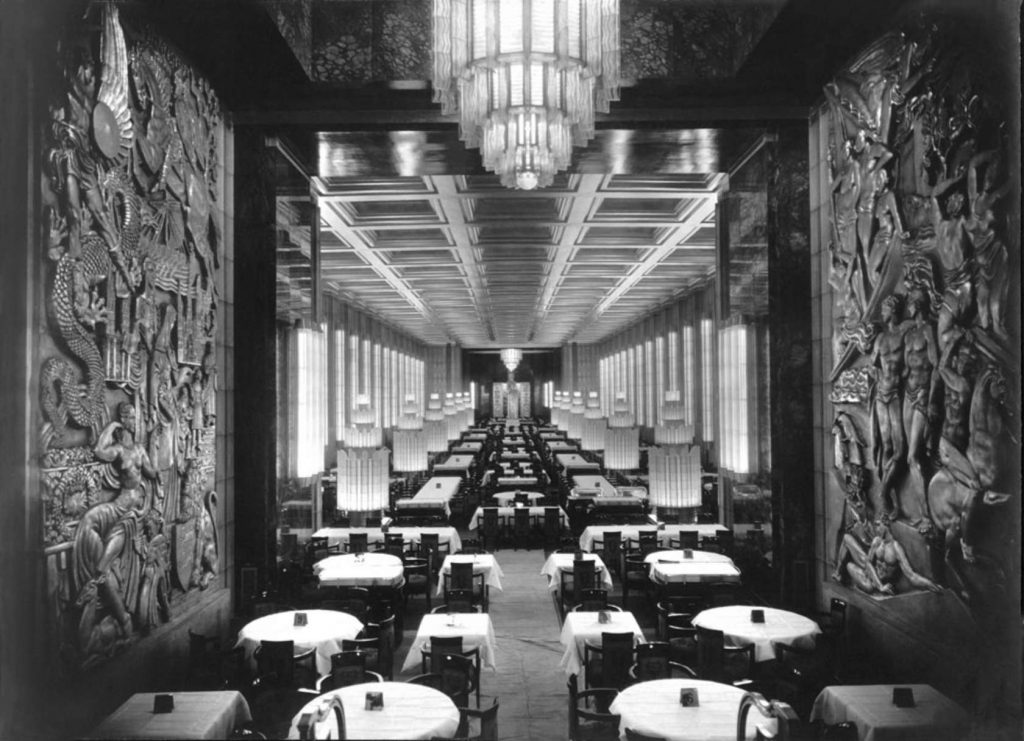
In 1925, the Exposition Internationale des Arts Décoratifs et Industriels Modernesin Paris unveiled a new design language, all geometric rigor, exotic veneers, and lacquered surfaces. Within a decade, this vocabulary found its most spectacular patron not in any Parisian salon, but aboard the SS Normandie, launched in 1935. At 1,029 feet, she was the largest and fastest ship afloat and her interiors, conceived by designers including Jean Dupas and René Lalique, were the most ambitious Art Deco commission ever undertaken. The great first-class dining room stretched longer than the Hall of Mirrors at Versailles.
THE MATERIAL SHIFT
Ships demanded materials that were simultaneously luxurious and resistant to saltwater, humidity, and the constant vibration of engines. The answer was lacquered wood, high-gloss Macassar ebony and rosewood veneers sealed with cellulose lacquer alongside marine brass (a corrosion-resistant alloy) and the structural integration of plate glass into mirrored walls. These materials migrated directly into the domestic interior because they solved the same problems: durability disguised as opulence. The Normandie’s decorators introduced matching furniture suites: sideboard, cocktail cabinet, dining chairs, as a cohesive scheme, the direct ancestor of today’s “total look” interior design.
THREE SIGNATURE ELEMENTS
01
Porthole Mirror
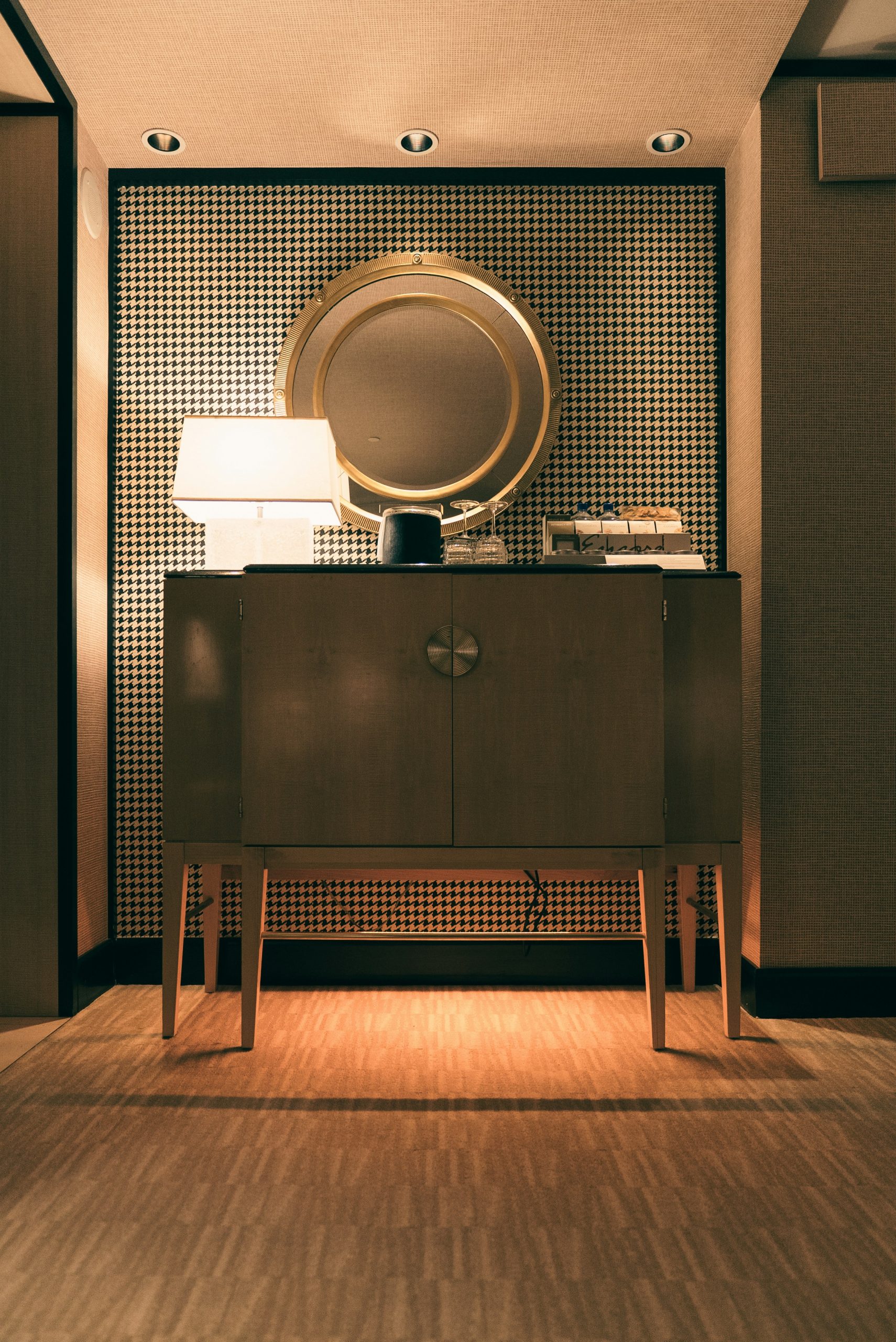
Circular mirrors in thick brass or lacquered frames, derived directly from the ship’s watertight porthole design. Instantly recognizable on any contemporary feature wall.
02
Lacquered Sideboard
High-gloss cabinets in black or deep jewel tones with inset brass hardware. A direct descendant of liner stateroom furniture, built to look extraordinary in confined spaces.
03
Brass Accent Fixtures
Unlacquered or satin brass in light fittings, door furniture, and table bases, the direct material legacy of shipboard fittings engineered for permanence in harsh conditions.
GET THE LOOK
- Hang a single large circular mirror (minimum 60cm diameter) in an unlacquered brass frame, this one piece anchors the entire reference without becoming costume.
- Choose a sideboard in high-gloss deep navy or forest green lacquer with recessed brass pulls rather than black, it reads as contemporary, not retro.
- Layer aged brass and smoked glass in lighting: a sculptural wall sconce in those two materials is the single most effective way to introduce 1930s glamour into a room without a theme.
- Resist the urge to pair every Art Deco element with another. One lacquered surface, one brass fixture, and natural linen upholstery reads as assured and sophisticated.
Leave a Reply